Cryptocurrency trading is the act of speculating on cryptocurrency rate motions via a CFD trading account, or buying and selling the underlying coins via an exchange. CFDs trading are derivatives, which allow you to hypothesize on cryptocurrency price motions without taking ownership of the underlying coins. You can go long (' purchase') if you believe a cryptocurrency will increase in value, or short (' offer') if you believe it will fall.
Your profit or loss are still determined according to the full size of your position, so leverage will amplify both profits and losses. When you purchase cryptocurrencies via an exchange, you acquire the coins themselves. You'll need to create an exchange account, put up the complete value of the asset to open a position, and keep the cryptocurrency tokens in your own wallet up until you're ready to offer.
Many exchanges likewise have limits on how much you can transfer, while accounts can be very costly to keep. Cryptocurrency markets are decentralised, which suggests they are not released or backed by a central authority such as a government. Instead, they encounter a network of computer systems. Nevertheless, cryptocurrencies can be bought and offered through exchanges and kept in 'wallets'.
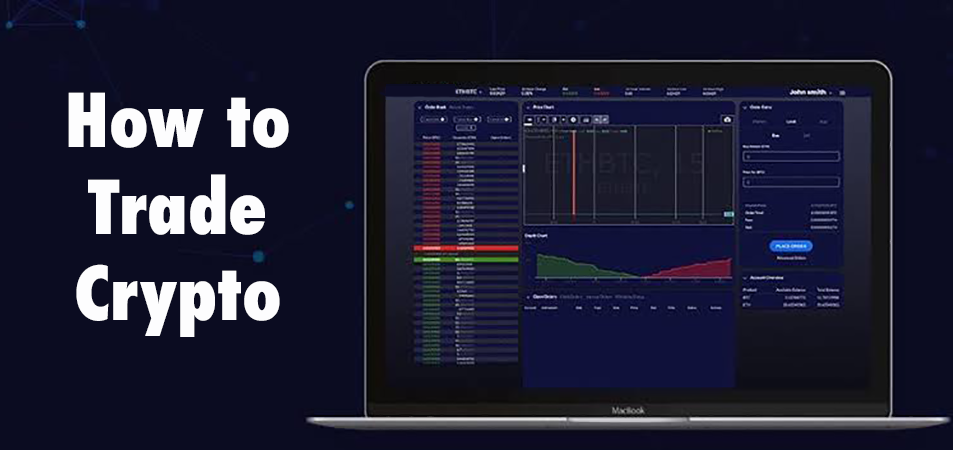 How to Trade Cryptocurrency? A Complete ...truemors.com
When a user wants to send out cryptocurrency systems to another user, they send it to that user's digital wallet. The transaction isn't considered last till it has actually been confirmed and added to the blockchain through a procedure called mining. This is also how brand-new cryptocurrency tokens are normally developed. A blockchain is a shared digital register of tape-recorded information.
To select the best exchange for your needs, it is essential to completely understand the kinds of exchanges. The very first and most common kind of exchange is the central exchange. Popular exchanges that fall into this classification are Coinbase, Binance, Kraken, and Additional reading Gemini. These exchanges are personal business that use platforms to trade cryptocurrency.
The exchanges listed above all have active trading, high volumes, and liquidity. That said, centralized exchanges are not in line with the approach of Bitcoin. They operate on their own private servers which creates a vector of attack. If the servers of the business were to be compromised, the entire system might be shut down for a long time.
The bigger, more popular central exchanges are by far the easiest on-ramp for new users and they even provide some level of insurance should their systems stop working. While this holds true, when cryptocurrency is bought on these exchanges it is stored within their custodial wallets and not in your own wallet that you own the secrets to.
Must your computer and your Coinbase account, for instance, become compromised, your funds would be lost and you would not likely have the ability to claim insurance coverage. This is why it is necessary to withdraw any large amounts and practice safe storage. Decentralized exchanges operate in the same manner that Bitcoin does.
Instead, consider it as a server, other than that each computer system within the server is spread out across the world and each computer system that makes up one part of that server is controlled by a person. If among these computer systems turns off, it has no effect on the network as a whole since there are plenty of other computer systems that will continue running the network.